
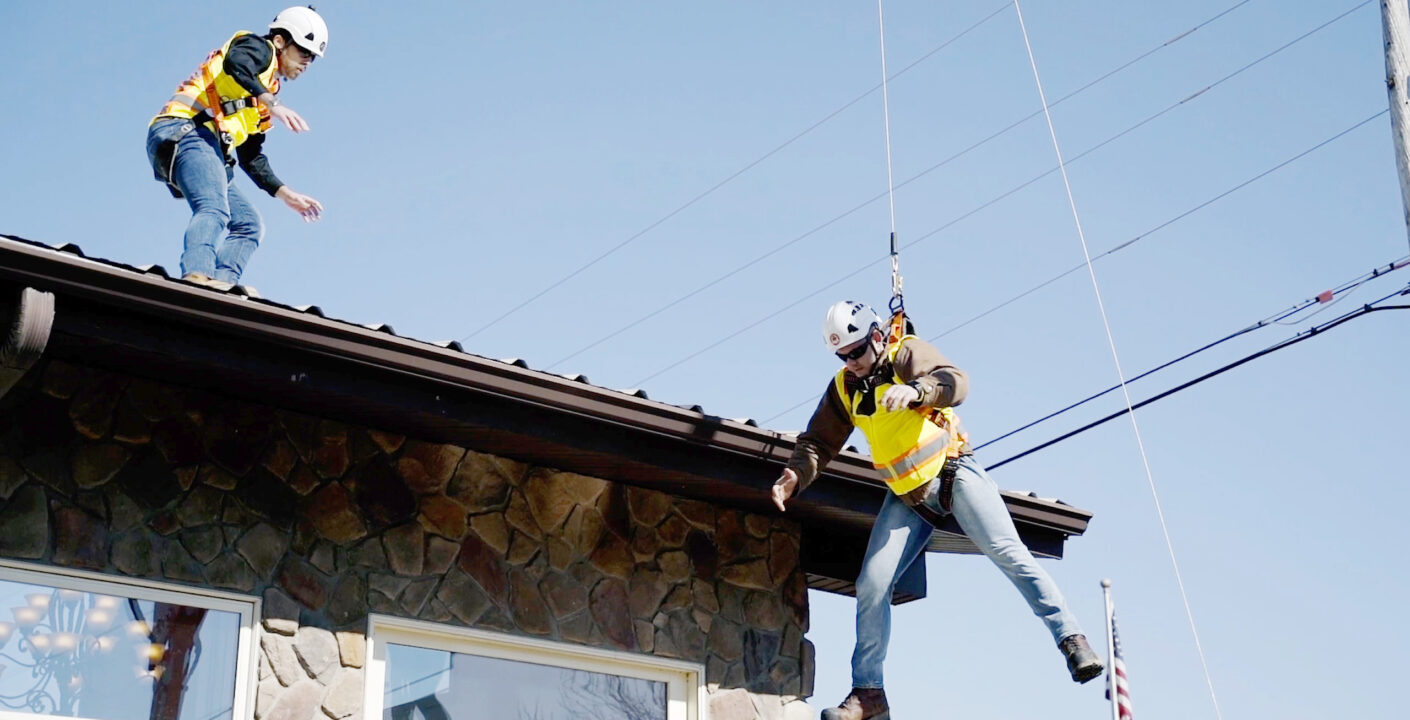
The Short Answer: Suspension trauma—also called orthostatic intolerance—occurs when a worker is left hanging in a safety harness after a fall. Blood can start to pool in the lower extremities, cutting off circulation and oxygen to vital organs, which can quickly lead to loss of consciousness or even cardiac arrest. A complete fall protection system must include a rescue plan, proper harness design, and trained rescue teams to ensure prompt rescue and proper treatment.
Falls are one of the most dangerous hazards on any jobsite. Crews rely on fall arrest systems to stop a fall and save lives, but there’s a hidden danger that many workers don’t realize—what happens after the fall has been stopped. When a worker is left hanging motionless in a harness, they can quickly face a life-threatening condition known as suspension trauma. Understanding this risk and knowing how to respond is just as critical as preventing the fall itself.
What is Suspension Trauma?
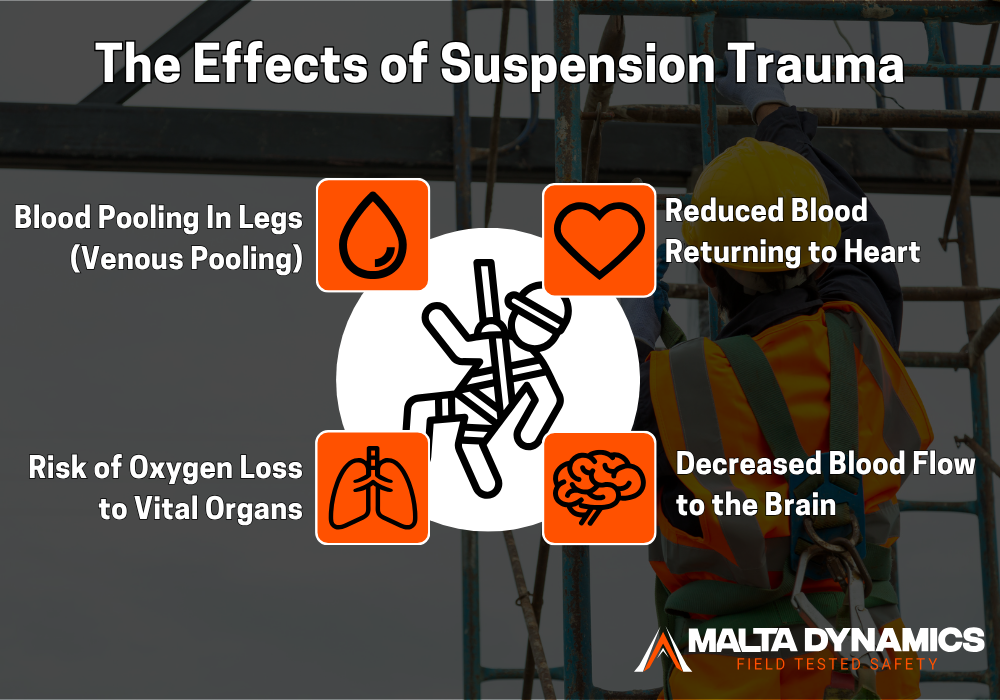
Suspension trauma, also known as orthostatic intolerance or suspension syndrome, happens when a suspended worker remains in an upright position without movement. Blood begins to pool in the lower limb, slowing venous return and reducing blood flow to the heart and brain (cerebral perfusion). This drop in blood pressure can cause a lack of oxygen reaching the brain (cerebral hypoxia), lightheadedness, and ultimately loss of consciousness. Motionless vertical suspension in a harness can become life-threatening within minutes.
Why Suspension Trauma is So Dangerous
The same fall arrest system designed to save a worker from falling can create new risks if the worker remains in a suspended position for too long. Harness suspension restricts natural movement, worsening venous pooling and oxygen supply to the brain.
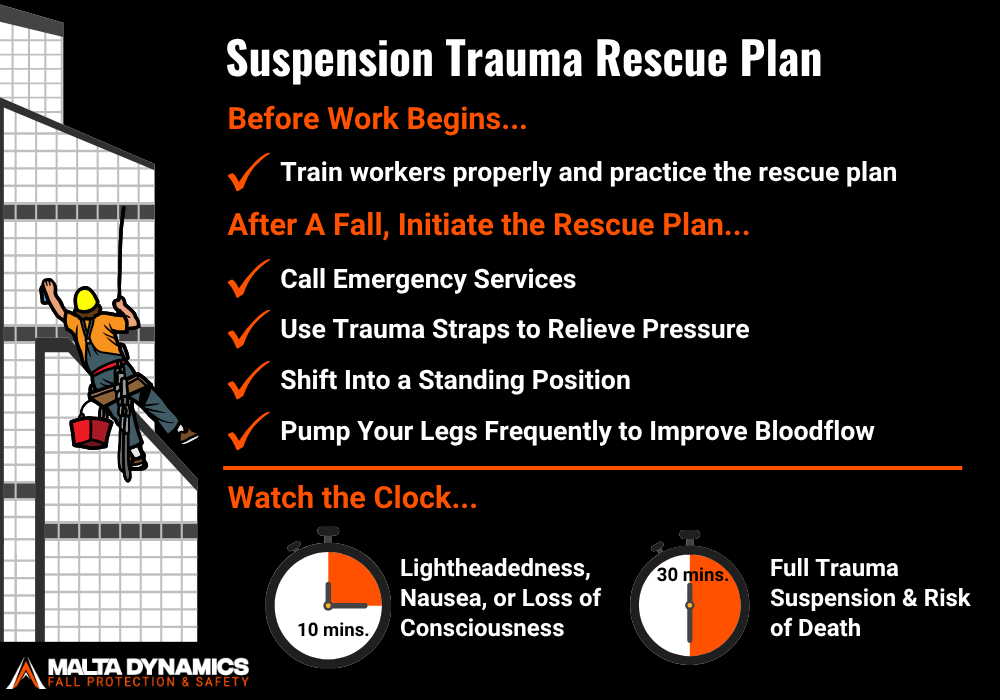
Orthostatic shock can set in quickly—sometimes in less than 10 minutes—leading to rapid breathing, fainting, or even cardiac arrest. Because symptoms may appear suddenly, suspended workers often cannot call for help once blood flow and oxygen delivery to vital organs are compromised.
Warning Signs and Symptoms
Crews must recognize the early signs of suspension trauma to keep workers safe. Common indicators include:
- Lightheadedness, dizziness, or nausea
- Tingling or numbness in the lower extremities
- Shortness of breath or rapid breathing
- Confusion, disorientation, or fainting
If left untreated, these signs can escalate to brain damage, physical injury, or even death. Recognizing them early is critical for prompt rescue and survival.
Prevention Strategies
Fall protection is not just about stopping a fall—it’s about preventing further harm after the arrest. Steps that reduce the risk of suspension trauma include:
Training
Training ensures every at-height worker understands the risks of suspension trauma. Workers should also be familiar with the signs of light headedness, rapid breathing, and loss of consciousness, so they can recognize symptoms in themselves or others and trigger prompt rescue.
Proper Harness Fit
A properly adjusted safety harness is essential for reducing restriction of blood circulation and pressure on the lower extremities. Harness design plays a key role—poor fit can increase venous pooling and accelerate the onset of suspension trauma.
Trauma Relief Strap Use
Trauma straps allow a suspended worker to push against the strap, contracting the leg muscles and helping restore venous return while awaiting rescue. This simple feature can improve blood flow and extend the time a worker can remain in a suspended position without severe health consequences.
Practice Drills
Running regular suspension rescue drills prepares crews and rescue teams to respond quickly and confidently in an emergency. Practicing rescue procedures helps ensure that workers are not left in a suspended position for long periods and that proper treatment is delivered immediately after recovery.
Rescue Planning and Response
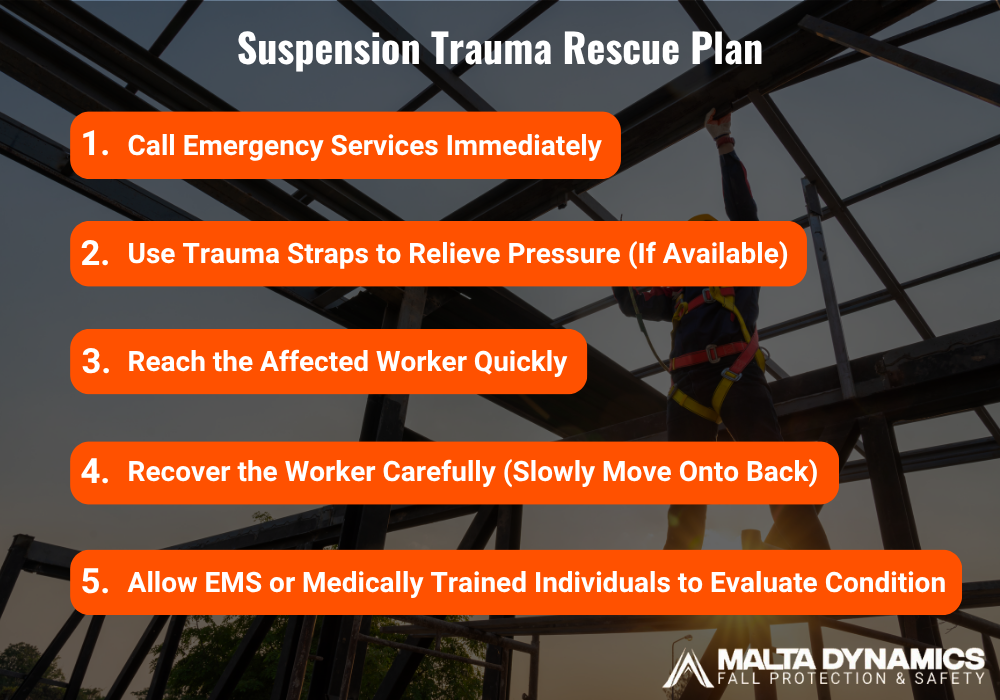
A fall protection program must include a rescue plan that accounts for suspension trauma. Once a fall occurs, prompt rescue is essential to restore blood flow and oxygen supply. Rescue teams should be trained in both self-rescue and assisted rescue procedures, with safety equipment staged for rapid deployment.
Once the suspended worker is recovered, placing them in a horizontal position or supine position too quickly can worsen orthostatic shock. Transition the worker carefully from a suspended position to a sitting position, then gradually into a full horizontal position to avoid sudden shifts in blood pressure.
Emergency services should always be contacted if symptoms persist. Even after prompt rescue, medical professionals should check heart rate, blood pressure, and other vital signs to confirm the worker has not experienced cerebral hypoxia or other complications.
Final Thoughts on Suspension Trauma
Suspension trauma is a hidden risk that can turn fall protection into a life-threatening emergency. Understanding the dangers, recognizing early symptoms, and preparing with the right harness design, trauma straps, and personal protective equipment are essential for protecting workers.
A fall protection system is only complete when it includes a rescue plan and trained response procedures. By preparing for suspension trauma, safety managers and rescue teams can keep workers safe, maintain oxygen supply to vital organs, and save lives when every second counts.
Why Choose Malta Dynamics
At Malta Dynamics, we design fall protection equipment with the realities of the jobsite in mind. Our safety harnesses are engineered with comfort and circulation in mind, while trauma straps and connecting devices are built to help suspended workers relieve pressure and maintain blood flow until prompt rescue is possible.
From full-body harnesses and fall arrest systems to custom rescue solutions, our products meet OSHA and ANSI requirements and are tested to perform under the toughest conditions. With input from safety executives, at-height workers, and rescue teams, Malta Dynamics delivers equipment you can trust when it matters most.
Protect your crews from suspension trauma and other hidden fall hazards. Explore Malta Dynamics’ complete line of fall protection systems today.
